How Stress and Inflammation Shape the Aging Feline Brain with Dr. Federica Pirrone
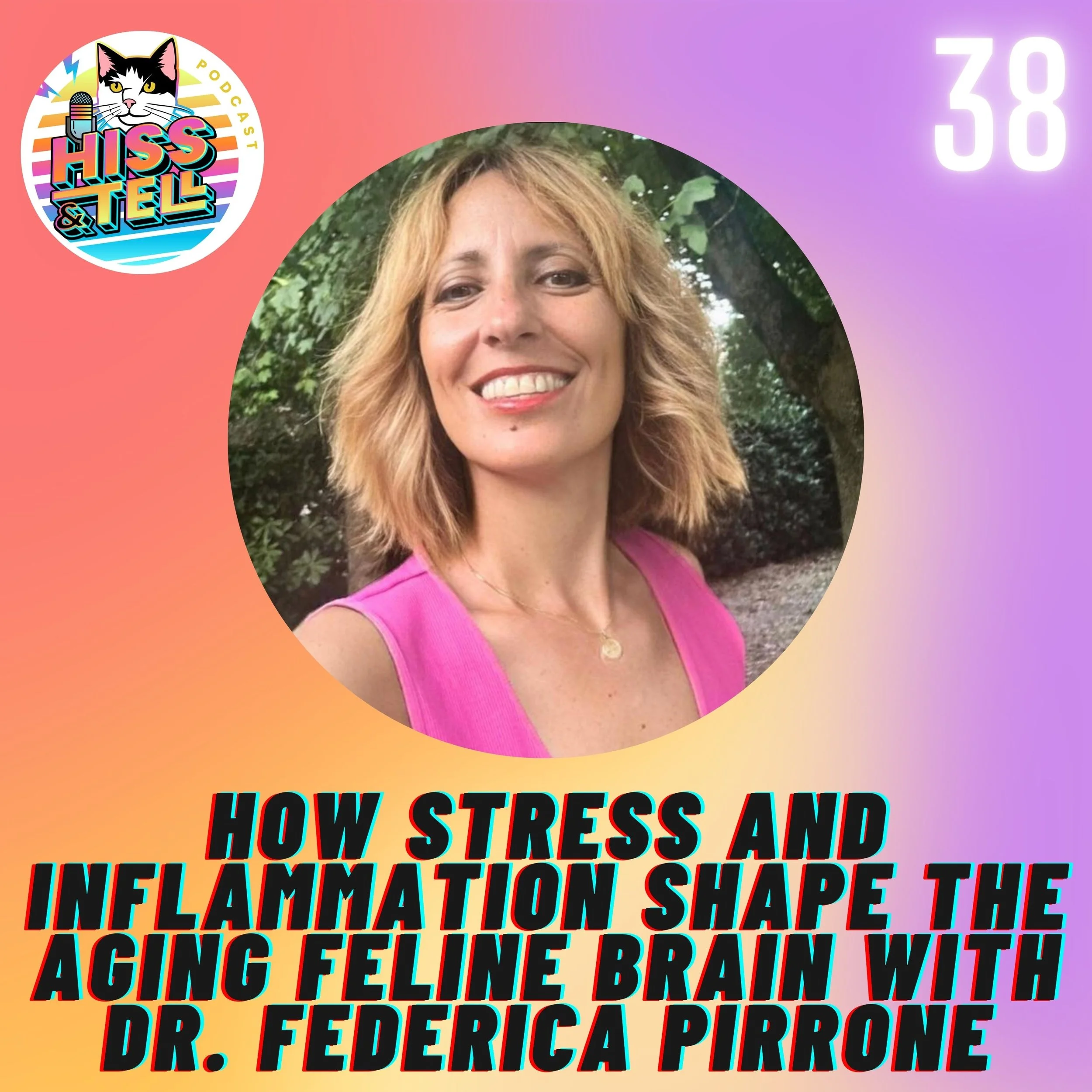
Federica Pirrone, DVM, Ph.D, is an ethologist and Associate Professor of Veterinary Ethology and Animal Welfare at the University of Milan, Italy. Her research focuses on animal behavior and emotions, aging, inflammaging, cognition, and the human–animal relationship, with a special interest in cats and dogs. She is involved in several national and international research projects and collaborates with research groups abroad, including a long-term project with the University of Pennsylvania on aging and cognition in domestic cats. She also coordinates the Mourning Dog Project, an international network studying behavioral and emotional responses to loss in dogs and their caregivers. Alongside her academic work, Federica is very active in science communication. She speaks regularly at public events, festivals, and TEDx talks, appears on radio and TV, and writes for both scientific journals and popular media. She is the author of Un’etologa in famiglia. Genitori, figli e parenti scomodi (An Ethologist in the Family: parents, young, and tricky relatives).
Senior cats rarely complain, but their brains may be asking for help. We sit down with ethologist Dr. Federica Pirrone from the University of Milan to unpack new research that ties subtle stress behaviors and low-grade inflammation to measurable changes in feline cognition. Using simple, at-home tests — a spatial memory task and an “unsolvable” problem that tracks gaze alternation — her team found that many older cats display greater social flexibility, a kind of earned wisdom. Yet when age intersects with heightened inflammatory markers like interleukin-1β, that flexibility drops, and cats are less likely to look to their caregiver for information or help.
We explore what inflammaging actually is and how a persistent, low-level inflammatory state can reach the brain, slowing neural signaling, blunting motivation, and making complex social cues harder to process. You’ll hear practical, science-backed ways to support cognition: predictable routines without boredom, short play sessions, gentle food puzzles, three-dimensional spaces with perches and hiding spots, and consistent nutrition that maintains a healthy body condition. We also share why twice-yearly vet visits for seniors are non-negotiable and how to track “that’s different” moments before they snowball.
There’s a hopeful thread through it all: early support can slow decline and extend health span. We talk through a real case where small environmental changes and added food bowls restored confidence and weight in a 14-year-old cat who had started to give up on simple tasks. We also dig into why cats are underrepresented in cognition research, how a supervised, video-based citizen science approach kept cats calm at home, and what longitudinal studies could unlock next.
Listen to full episode :