How Pet Owners Power Cat Science with Darwin's Ark & Dr. Elinor Karlsson
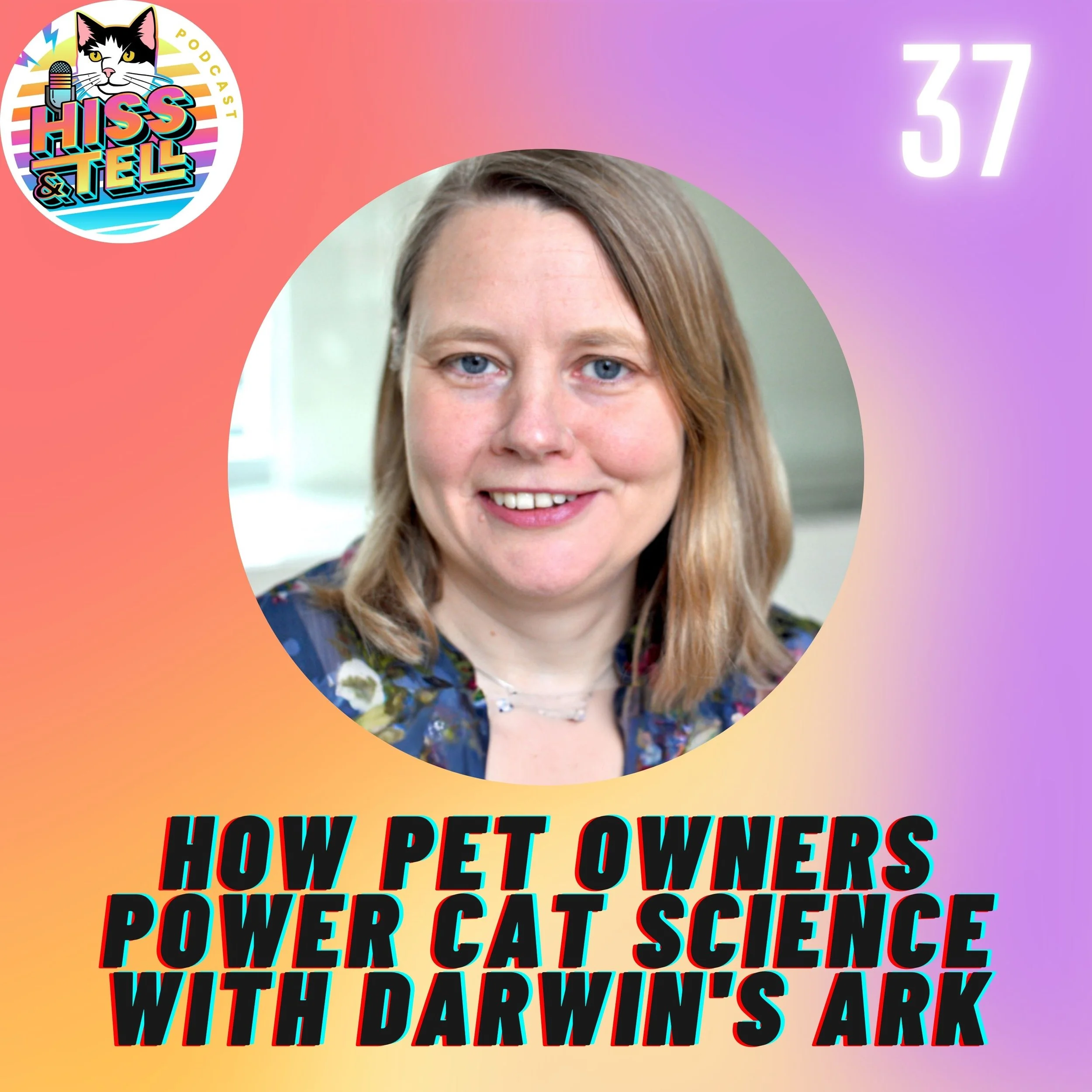
Dr. Elinor Karlsson is an associate professor in Genomics and Computational Biology at UMass Chan Medical School, and director of the Vertebrate Genomics Group at the Broad Institute of MIT and Harvard. As an evolutionary biologist, she uses genomics and bioinformatics to understand the origins and purposes of mammalian traits. She applies this expertise to a variety of research projects, including Zoonomia, an international collaboration to understand genomic diversity and evolution in mammals. Elinor is recognized as one of the world’s leading researchers in canine genetics, but she shares her home with three lovable felines. She is thrilled Darwin’s Ark has expanded its groundbreaking community science to include cats.
Ever wonder what your cat’s DNA can tell us about fetching, affection, and health? We teamed up with Dr. Elinor Karlsson, chief scientist at Darwin’s Ark and professor at UMass Chan and the Broad Institute, to unpack how a simple fur-combing kit and smart surveys can unlock big answers about everyday feline life. No lab coats at home required - just your observations, your cat’s fur, and a few minutes of thoughtful reporting. Darwin's Ark is a community science nonprofit that engages pets and their people in groundbreaking research. By uniting pet lovers with leading scientists, Darwin’s Ark explores the genetic foundations of health and behavior, helping to advance scientific discoveries that improve health and well-being for both pets and people. As of our reporting, Darwin’s Ark has over 20,000 cats enrolled; 2,000+ participating in their DNA research, of which 1,000 have been sequenced; and community scientists have answered more than 1.25M survey questions about their cat!
We dig into why cats are such a powerful, understudied genetic model compared with dogs. Because most cats aren’t shaped by recent, narrow breed histories, their diversity offers cleaner signals for behavior genetics and disease research. That opens the door to questions we’ve struggled to answer: Are fetching and other elements of the predatory sequence strongly heritable? How does early socialization change adult confidence and play? Which common diseases in cats have measurable genetic risk, and which are driven by environment?
We also confront internet myths with data. The “orange cats are dumb” trope? Not supported by early looks, and ongoing work aims to test these claims at scale. Affection comparisons with dogs? Careful measures suggest cats are just as attached as many guardians know firsthand. Best of all, Darwin’s Ark is open data, so researchers everywhere can build on these findings - and your contributions fuel that progress. If you’re ready to help, there’s a limited-time $50 sequencing offer (use code Hiss&Tell25 through January 2026) using a gentle fur comb, making participation easier and less stressful for cats.
Listen to full episode :