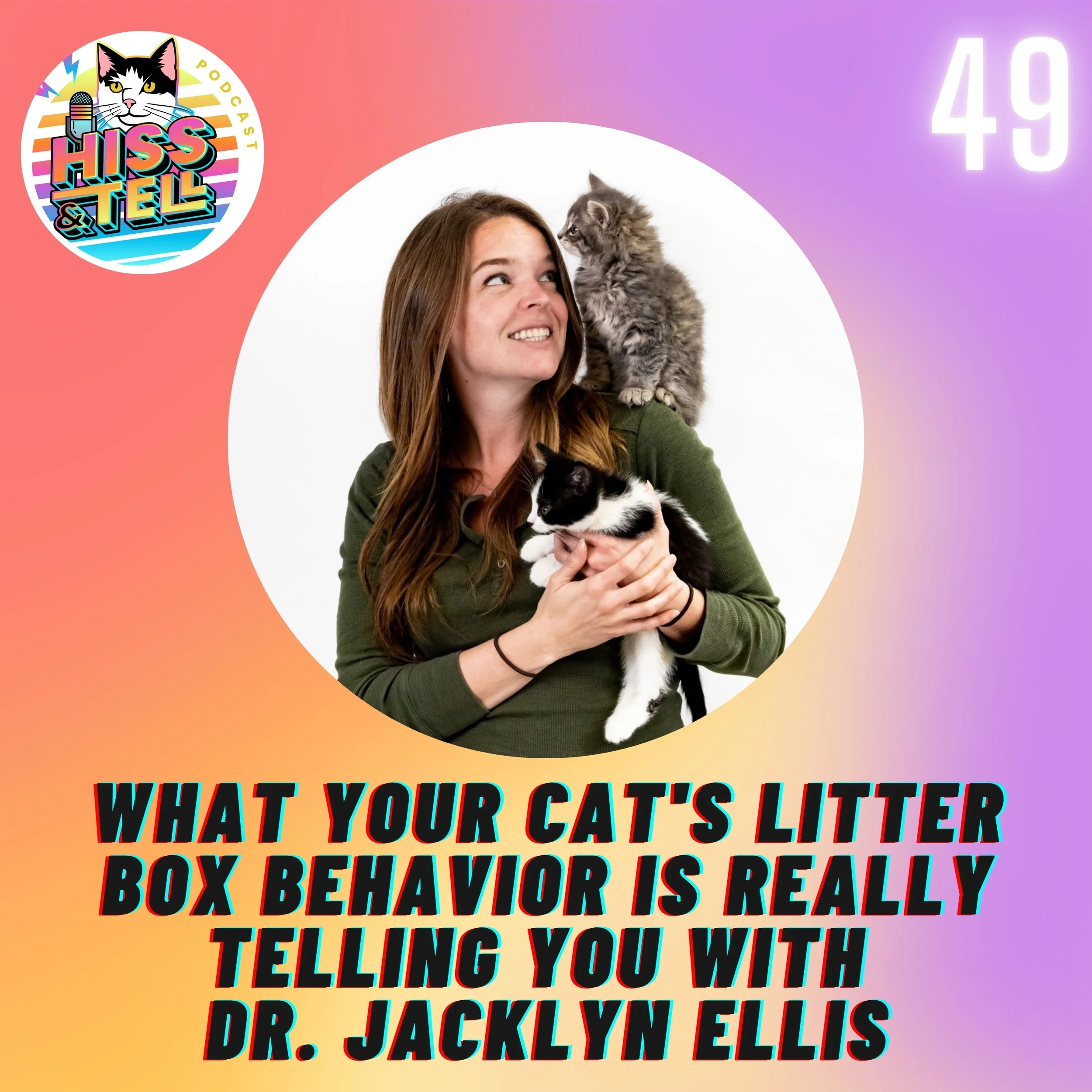
Jacklyn Ellis is board certified by the Animal Behavior Society as a Certified Applied Animal Behaviorist, is Certified in Shelter Behavior – Cat by the International Association of Animal Behavior Consultants, and is the Director of Behaviour at Toronto Humane Society. She earned her PhD in Animal Welfare at the Atlantic Veterinary College, University of Prince Edward Island, where she conducted research on methods for reducing stress in shelter cats.
Her work has been published widely in peer reviewed journals and she has presented at many national and international conferences, particularly on feline stress and elimination behaviour. She has recently authored two chapters for a new edition of the leading textbook on the behaviour and welfare of shelter animals.
Cat pee on the rug. Poop beside the box. A cat who “always used it before” and suddenly won’t. Those moments feel personal, but they’re usually biology, stress, or a litter box setup that isn’t working anymore. I’m joined by Dr. Jacklyn Ellis, Director of Behavior at the Toronto Humane Society, to get uncomfortably specific about what cats are doing in the litter box and what they’re trying to tell us.
We unpack the science of feline elimination behavior, including how researchers build an ethogram to capture dozens of distinct “micro behaviors” that most of us never notice. Dr. Ellis explains what changes when cats move between an enriched environment and a restrictive, clinic-like one and why holding urine can be more than a behavior issue. We also talk about the subtle signs of discomfort, from pawing at the wall to repeated aborted attempts, and when a vet visit matters even if your cat seems “fine,” especially with conditions tied to FLUTD and hidden pain.
Then we dive into her multicat household litter box research: clean vs dirty boxes, whether cats care who used it, and the surprising difference between odor and physical obstruction. If you’ve ever wondered how often to scoop, whether scented litter helps, or how “one box per cat plus one” actually plays out in real homes, you’ll leave with clear, practical guidance, including how to run a simple preference test and why box size is often the biggest win.
If this helped you see your cat differently, subscribe, share the episode with a fellow cat person, and leave a rating or review so more owners can solve litter box problems with empathy and evidence.
Further Info
Does Previous Use Affect Litter Box Appeal in Multi-Cat Households?
Listen to full episode :