Why We Keep Underestimating Cats With Dr. Monique Udell
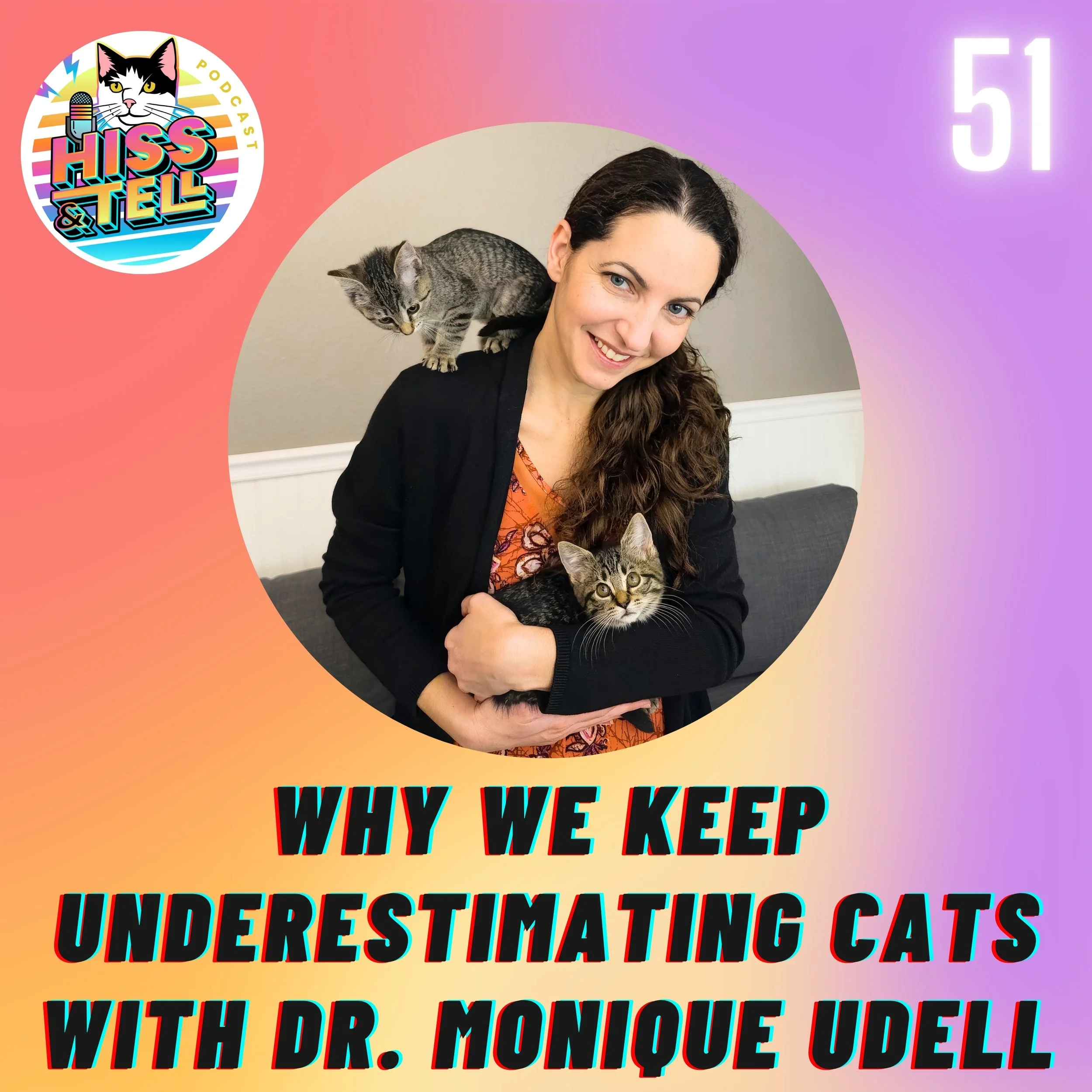
Dr. Udell is a Certified Applied Animal Behaviorist and Professor of Animal Science at Oregon State University, where she teaches courses in animal behavior, cognition, and learning and directs the Human-Animal Interaction Lab. She earned her PhD in Psychology, with a secondary field in Behavioral Ecology, from the University of Florida. Her research has explored many areas of animal behavior and cognition, with a special focus on the social behavior of cats and dogs and the relationships they share with humans. She is especially passionate about translating the science of sociability and attachment into practical strategies that support companion animal welfare and enhance the wellbeing of animals and the people who care for them. To learn more visit: https://thehumananimalbond.com/.
Cats have a reputation for being mysterious, stubborn, and “low maintenance” but that story falls apart fast when you look at the science. I’m joined by Dr. Monique Udell, professor at Oregon State University and director of the Human Animal Interaction Lab, to unpack what research reveals about feline cognition, cat communication, and the everyday ways cats pay attention to us.
We talk about why dog cognition has dominated the spotlight, how early psychology research actually relied on cats, and what changes when we design studies that make sense to feline motivation. Dr. Udell shares what her lab is learning about cats in training classes, cat assisted interventions, and cat child partnerships, plus the surprisingly important role of social rewards. If you’ve ever felt like your cat “gets bored” with treats or quits after a few reps, you’ll understand why that can be normal cat behavior, not a personality flaw.
Then we dive into the signals many of us miss: subtle body language, consent cues during petting, how cats respond to human attention, and why scent, sound, and even learned words matter in a cat’s world. We also break down persistent myths that harm cat welfare, from the idea that cats can’t be trained to the belief that indoor cats don’t need daily enrichment. You’ll leave with concrete, evidence-based ideas for enrichment, play, and foundational skills like carrier training and harness training that can make vet care and emergencies safer.
Subscribe for more science-backed cat behavior conversations, share this with a fellow cat person, and leave a rating or review if it helped you see your cat differently.
Further Info
Cats, Like Children and Dogs, Develop Attachments To Their Caregivers, Study Shows
Domestic cats recognize the names of their feline companions
Listen to full episode :