Cat Body Language & Stress Signals with Dr. Serenella d'Ingeo
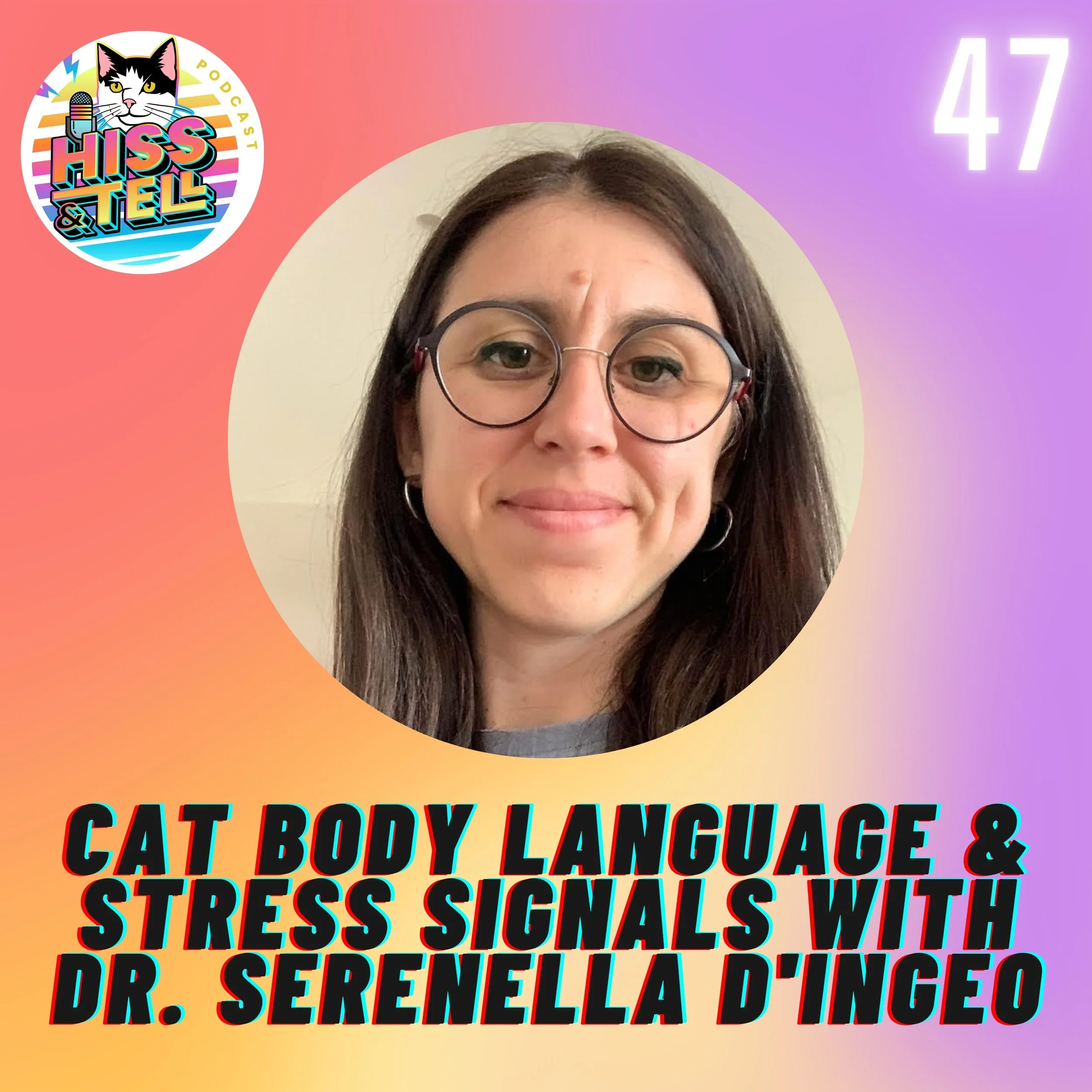
Serenella d’Ingeo is an Associate Professor of Veterinary Physiology and Behaviour at the Department of Veterinary Medicine, University of Bari, Italy. She is a veterinarian and behavioural neuroscientist whose research focuses on brain lateralization and emotional processing in domestic animals. Her work explores human–animal relationships and communication using behavioural and physiological approaches, with
particular interest in dogs, cats, horses, and donkeys.
Your cat is “telling you” what they feel. The problem is that most of us are listening with the wrong cues. I sit down with Professor Serenella d'Ingeo to unpack what the science of feline communication actually says and why humans routinely miss stress signals that are right in front of us.
We talk about why cats can seem aloof or unreadable compared with dogs, including their different domestication history and the fact that cats are facultatively social. From there, we dig into research findings that are a little uncomfortable but incredibly useful: people are only slightly better than chance at identifying whether a cat is relaxed, tense, or fearful, and the observer’s characteristics and experience can matter more than the cat’s behavior itself. If you live with an indoor cat whose environment depends on you, that gap in understanding has real consequences for welfare, chronic stress, anxiety, and behavior problems.
Then we get practical with cat body language and petting consent. We break down what to watch across the whole body, how pupil size can be an early indicator of arousal, and why “staying still” during petting is not the same as enjoying it. I also share an easy tool for cat parents: record your petting sessions on your phone and replay them to catch the tiny moment your cat says “enough” before it turns into petting aggression.
We also explore multicat household dynamics and when to intervene, plus one of the most fascinating studies on cat scent and brain lateralization, including a nostril preference linked to stress processing. If you care about cat behavior, feline stress signals, and building a calmer home, hit play, subscribe, and share this with a fellow cat person, then leave a rating or review so more listeners can find the show.
STUDIES
Relationship between asymmetric nostril use and human emotional odours in cats
Listen to full episode :